
- admin
- August 5, 2025
When Home Is the Most Dangerous Place
When Home Is the Most Dangerous Place
We teach children to be afraid of strangers.
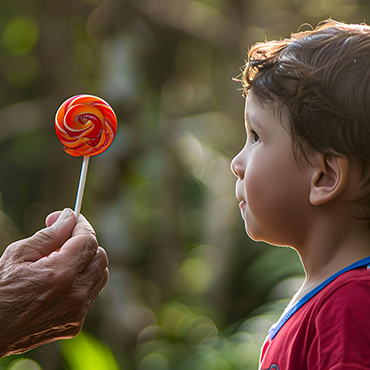
We tell them not to take candy from people they don’t know. We warn them about dark alleys and unfamiliar cars. We give them rules for the outside world because we believe — we need to believe — that home is safe.
But for millions of children, it isn’t.
For many children, the greatest danger does not wait outside the front door. It lives behind it.
The Myth of the Safe Home
There is a story we tell ourselves as a society. It goes like this: dangerous people are easy to spot. They are strangers. They are cold. They are obviously broken.
But abuse rarely looks the way we imagine it.
It doesn’t always look like shouting or visible bruises. It doesn’t always come from someone who seems unstable or frightening to the outside world. Sometimes it comes from a parent who seems charming at church. A guardian who is well-liked at work. A family member who everyone describes as “so good with kids.”
The home that looks perfectly normal from the outside can be a place of deep terror on the inside.
And the child living inside that home learns something early: the world outside does not know. And often, the world outside does not want to know.
What “Behind Closed Doors” Actually Means
When we use the phrase “behind closed doors,” we often mean something vague. Something private. Something that is none of our business.
But for a child experiencing abuse, “behind closed doors” means something entirely different.
It means there are two realities.
There is the reality that the world sees — school mornings, holidays, birthday photographs, a family that looks intact. And then there is the reality that exists only inside those walls — fear, confusion, pain, and the impossible weight of keeping a secret no child should ever have to keep.
It means that when the door closes, the rules change.
What is acceptable inside does not match what the outside world would ever permit. The child learns to shift between these two worlds — performing normalcy in public and surviving privately. They become experts at hiding. Not because they want to, but because hiding is the only form of control they have.
Why Abuse Thrives in the Home
Home-based abuse is particularly damaging because it violates the one place a child is supposed to feel safe.
When danger comes from a stranger, a child can be pulled away from it. They can be removed. They can be protected.
But when danger comes from inside the home — from a parent, a sibling, a caregiver — removal is complicated. The child depends on that person. For food. For shelter. For whatever scraps of love or attention exist in that environment.
Abusers within the home often use that dependency as leverage.
They do not need to threaten loudly. The threat is structural. It is built into the relationship itself. A child who speaks up risks losing the only stability they have — however painful and broken that stability may be.
This is why so many children stay.
Not because they don’t know it’s wrong. Not always because they lack the words. But because survival — even in a dangerous home — can feel safer than the unknown of what happens if the secret gets out.
The Damage That Accumulates in Silence
Living in a dangerous home does not just cause isolated incidents of harm. It reshapes a child’s entire understanding of the world.
A child who grows up without safety at home learns that:
- The people who are supposed to protect them may be the very ones causing harm.
- Vulnerability is something to be punished, not met with care.
- Asking for help is risky — not helpful.
- Love and pain often come from the same source.
These lessons do not simply disappear when the child grows up or leaves. They become the architecture of how that person understands relationships, trust, and their own worth.
Many survivors of childhood home abuse spend years — sometimes decades — untangling the difference between love and control, between care and manipulation, between what they deserved and what they were given.
The damage is not just what happened. It is what the child was forced to believe about themselves because of what happened.
What the Rest of Us Can Do
If abuse so often happens behind closed doors, and children are so often unable or unwilling to speak — what can the adults on the outside actually do?
The answer is not to wait to be told.
It is to pay attention.
Children in dangerous homes often show signs not through words, but through behavior. They may be hypervigilant. They may become invisible, working hard never to draw attention to themselves. They may flinch at raised voices. They may seem detached, or swing between emotional extremes that seem out of proportion.
They may say small things that don’t quite fit — an offhand comment, a pause that lasts a beat too long, a reaction that reveals more than they intended.
These are invitations.
Not always conscious ones. But invitations nonetheless.
The role of a trusted adult is to notice. To ask gently. To create enough safety that a small truth can be told — and when it is, to receive it without panic, without dismissal, and without making the child feel responsible for the consequences.
Most importantly: believe them.
A child who works up the courage to say something true deserves to be believed the first time.
The Child Who Made It Out
For those who grew up in homes like this — homes where the door closing meant something frightening — there is something important to understand.
You were not wrong to feel afraid.
You were not imagining it.
And the strength it took to survive each day in an environment like that — to keep going, to keep functioning, to keep breathing — is a form of courage most people will never fully comprehend.
The home was supposed to be a safe place, and it wasn’t. That was not your failure. It was a failure of the adults who were supposed to protect you.
You were not a throwaway child.
You were a child who deserved so much more than you were given.
And survival — then and now — is enough.
The Edge of Insanity: The Throw Away Child by Karen A. Reigns is available now. A memoir about what happens behind closed doors — and the resilience that rises from it.